
MB.OS And The New Era Of Mercedes Infotainment For Drivers In Ontario
April 10 2026,
Mercedes-Benz built its reputation on engineering precision and luxury materials. Now the brand is applying that same rigor to software. MB.OS is the operating system that will power the next generation of Mercedes infotainment, changing the relationship between driver and vehicle beyond bigger screens or faster processors.
The transition from MBUX to MB.OS is a complete rethink of how the vehicle communicates, learns, and adapts. Current MBUX systems introduced voice control and touch interfaces that felt modern at launch. MB.OS rebuilds that foundation around a fully connected architecture, where the vehicle becomes a node in a larger digital ecosystem rather than a standalone device.
From Screen Size to Screen Intelligence
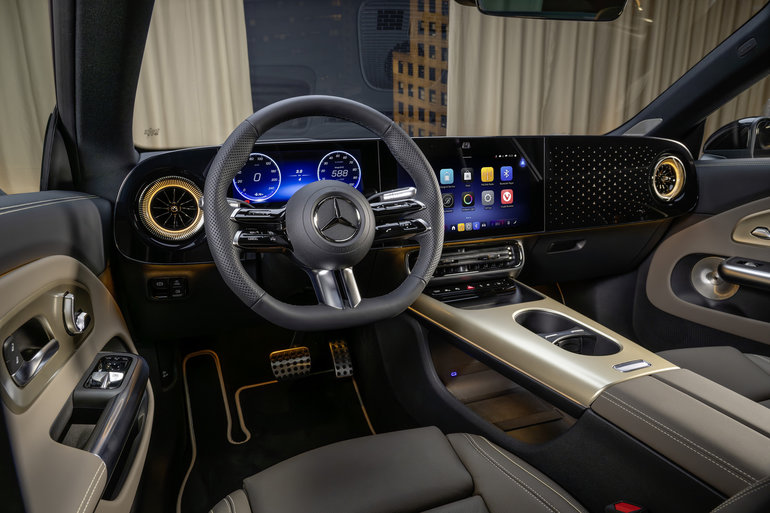
The most visible change is display hardware. MB.OS-powered vehicles feature configurations like the Superscreen or Hyperscreen - edge-to-edge glass panels spanning the entire dashboard. These higher-resolution, faster-responding interfaces render more information simultaneously without lag.
The real shift is what the screen can do. MB.OS runs multiple applications simultaneously, similar to a smartphone, without forcing the driver to close one function to access another. Navigation, media, climate, and vehicle settings coexist on the same display, with the system intelligently prioritizing what appears based on context. Approaching a turn expands navigation; adjusting temperature slides the climate panel into view without interrupting the map.
The system learns through machine learning, adapting the interface to your habits. If you always switch to a specific radio station during your morning commute, the system suggests it before you ask. Frequently adjusting seat heaters on cold mornings means MB.OS surfaces that control earlier in the menu hierarchy. This adaptive behaviour evolves with use.
Voice Control That Actually Understands Context
Current MBUX voice control responds to "Hey Mercedes" and handles basic commands, but requires precise phrasing. MB.OS introduces an AI-powered voice assistant that understands natural language and context. You can ask follow-up questions without repeating full commands. Say "I'm cold" instead of "set temperature to 22 degrees," and the system interprets intent and adjusts accordingly.
The assistant integrates with connected services. Ask about charging stations, and MB.OS pulls real-time data from ChargeHub or native navigation, showing availability, charging speed, and current occupancy. It can precondition the battery for fast charging when detecting you're heading toward a DC fast-charge location.
For Ontario drivers navigating Highway 401 traffic or planning weekend trips to Muskoka, this contextual intelligence makes the system feel like a co-pilot that anticipates needs.
Connectivity That Goes Beyond Phone Mirroring

Current MBUX systems support Apple CarPlay and Android Auto, making most drivers treat the vehicle's native interface as a phone pass-through. MB.OS shifts that dynamic by serving as the primary interface with deep integration into Mercedes' connected services and third-party apps.
MB.OS supports NACS connector compatibility when using an NACS adapter, meaning Mercedes EVs can access Tesla's Supercharger network. Navigation routes you to compatible chargers, displays real-time availability, and preconditions the battery to optimize charging speed - requiring tight integration between vehicle hardware and software that phone apps cannot replicate.
Over-the-air updates deliver new features and improvements remotely without service visits. MB.OS extends this to the entire vehicle architecture, including driver assistance systems, climate control algorithms, and suspension tuning. Your vehicle becomes more capable over time without physical modifications.
What This Means for Ontario Drivers
Ontario's climate makes certain features particularly relevant. MB.OS includes scheduled charging with departure times, so the vehicle preheats cabin and battery while plugged in, shifting energy load to the grid instead of the battery and preserving range on cold mornings. The system integrates with heated seats and steering wheel controls, prioritizing localized heating over full cabin HVAC to reduce energy consumption.
For drivers relying on public charging infrastructure, MB.OS provides real-time data on charger availability and pricing. The system routes you to the fastest available charger along your route, factoring in traffic conditions and state of charge. Traveling from Ottawa to Toronto, the system suggests optimal charging stops based on driving speed, weather conditions, and charger power output.
Remote start and preheat functions controlled through the Mercedes me app are particularly useful during Ontario winters, where preheating the cabin and defrosting windows before leaving saves time and improves comfort.
MB.OS Is the Interface Mercedes Has Been Building Toward
The shift from MBUX to MB.OS makes existing features work together cohesively and intelligently. The system learns habits, anticipates needs, and integrates with broader charging and connectivity infrastructure in ways current systems cannot match.
For Ontario drivers, the benefits are practical: better route planning, smarter energy management, and a context-aware voice assistant. The technology is functional in ways that matter during a February commute or a summer road trip to cottage country.
To experience MB.OS and the latest Mercedes-Benz electric vehicles, call us, book your appointment online, or walk in to Mercedes-Benz Ottawa Downtown in Ottawa today.