
Sedan Or SUV: When A C 300 Makes Sense And When To Step Up To A GLC In Ontario
April 15 2026,
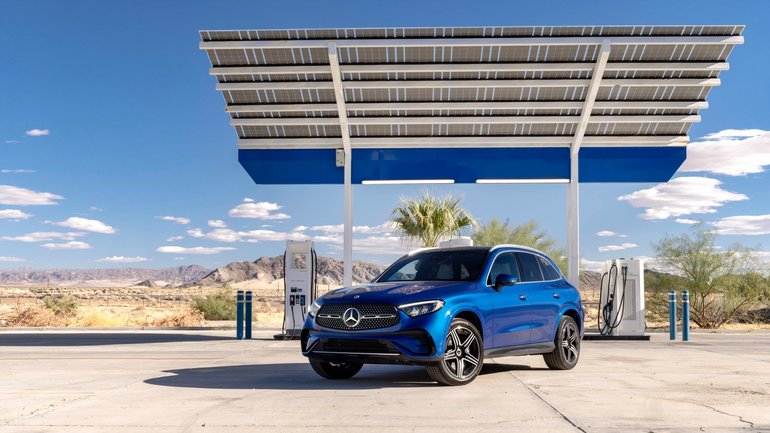
The C 300 sedan and GLC SUV share the same turbocharged powertrain and 4MATIC all-wheel-drive system, yet they deliver fundamentally different driving experiences. For Ontario buyers choosing between Mercedes-Benz's compact sedan and its compact SUV, the decision hinges less on capability gaps and more on how you actually use the vehicle day-to-day. The C 300 answers the challenge for drivers who cover long highway stretches, navigate tight urban cores, and want confident winter traction without the fuel penalty - while the GLC makes sense when cargo flexibility outweighs everything else.
|
Feature |
C 300 4MATIC Sedan |
GLC 300 4MATIC SUV |
|
Starting MSRP |
$62,250 |
Not disclosed |
|
Horsepower |
255 hp @ 5,800 rpm |
255 hp @ 5,800 rpm |
|
Torque |
295 lb-ft @ 2,000-3,200 rpm |
295 lb-ft @ 2,000-3,200 rpm |
|
0-100 km/h |
6.2 seconds |
6.2 seconds |
|
Fuel Economy (City) |
9.3 L/100 km |
10.0 L/100 km |
|
Fuel Economy (Highway) |
6.7 L/100 km |
Not disclosed |
|
Cargo Volume |
455 L |
620 L-1,680 L |
Pricing shown reflects information at the time of writing. Final pricing may vary. Contact us for complete pricing details.
What the Powertrain Actually Delivers
Both vehicles use Mercedes-Benz's 2.0-litre inline-four turbo paired with the 48-volt Integrated Starter-Generator mild hybrid system. The output is identical: 255 hp at 5,800 rpm and 295 lb-ft of torque between 2,000 and 3,200 rpm. The 9G-TRONIC nine-speed automatic transmission routes power through 4MATIC all-wheel drive on both platforms.
Both vehicles reach 100 km/h in 6.2 seconds. On Highway 401 merge lanes or passing manoeuvres between Kingston and Toronto, both deliver smooth, linear acceleration without turbo lag.
The mild hybrid system adds 20 hp of electric boost during hard acceleration and enables coasting with the engine off at highway speeds. Regenerative braking recovers energy during deceleration. These functions operate identically across both vehicles.
Where Fuel Economy Differs
The C 300 delivers 9.3 L/100 km in the city and 6.7 L/100 km on the highway. The GLC (based on 2025 specifications, the most recent available) consumes 10.0 L/100 km in city driving. The sedan's lower aerodynamic drag and reduced weight translate to measurable savings on long-distance Ontario driving.
For drivers covering the Ottawa-Montreal corridor or Toronto-Windsor route regularly, the C 300's highway efficiency reduces fuel stops and operating costs. The GLC's higher seating position and larger frontal area work against efficiency at sustained speeds above 100 km/h.
Where the Sedan Platform Earns Its Keep

The C 300's sedan architecture delivers sharper steering response and more composed handling through corners. The lower centre of gravity reduces body roll during lane changes on Highway 417 or navigating Barrhaven's residential streets. The lighter curb weight translates to more direct feedback through the electromechanical power steering.
Four-wheel independent suspension with selective damping adapts to road conditions in real time. The sedan's shorter wheelbase and reduced overhangs make tight parking manoeuvres easier in downtown Ottawa or Toronto's financial district. Parallel parking on Elgin Street or King Street East requires fewer corrections in the C 300 compared to the GLC's longer body and higher beltline.
Ontario's secondary roads - County Road 2 along Lake Ontario or Highway 60 through Algonquin Park - favour the sedan's planted feel and predictable cornering behaviour. The GLC handles competently, but the higher seating position and increased body mass soften the driving connection.
The Cargo Reality Check
The GLC provides 620 litres of cargo space behind the second row, expanding to 1,680 litres with seats folded. The C 300 offers 455 litres in the trunk. The liftgate provides easier loading access than the sedan's trunk opening. Taller items like strollers or standing luggage fit without folding seats.
The C 300's 455-litre trunk accommodates four full-size suitcases, a week's worth of groceries, or golf clubs for two. For drivers who rarely exceed that threshold, the sedan's fixed cargo area delivers sufficient utility.
Winter Traction Without the SUV Premium
Both vehicles deploy 4MATIC all-wheel drive with fully variable torque distribution. The system monitors wheel slip and road conditions 100 times per second, routing power to the wheels with the most grip. On snow-covered Highway 7 between Ottawa and Carleton Place, or during freezing rain on the QEW, both platforms provide confident traction.
The C 300's lower ride height and lighter weight reduce the risk of losing control during emergency braking on black ice. The sedan's 50/50 weight distribution improves stability during sudden lane changes to avoid obstacles. The GLC's higher seating position offers better visibility in heavy snowfall.
Ontario winters demand reliable all-weather capability. Both vehicles meet that requirement with winter-rated tires and 4MATIC.
Technology and Interior Refinement
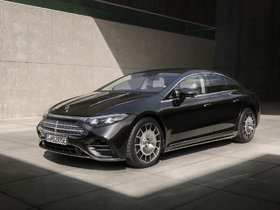
The C 300 features a portrait-style central multimedia touchscreen running MBUX, Mercedes-Benz's voice-activated infotainment system. Digital instruments replace analog gauges. KEYLESS-GO, wireless charging, and a foot-activated trunk release come standard. Brushed stainless steel pedals and AMG body styling add visual differentiation.
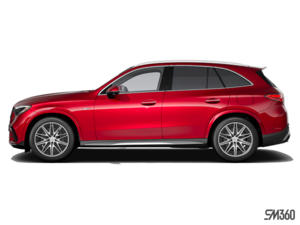
The GLC includes similar technology with MBUX, an 18-inch wheel package, and the Chrome Star-pattern grille. Both vehicles offer comparable interior materials, ambient lighting, and connectivity features. The GLC's higher seating position provides a more commanding view, while the C 300's lower driving position creates a more cocooned, performance-oriented feel.
Safety equipment includes Blind Spot Assist, Adaptive Highbeam Assist, and a full airbag array on both vehicles. The GLC adds a 360-degree camera, PRE-SAFE PLUS, and Trailer Stability Assist.
The Verdict for Ontario Highway Commuters
The C 300 makes sense for Ontario drivers who cover significant highway distances, navigate urban cores regularly, and want winter-ready AWD without sacrificing fuel efficiency. The sedan's 6.7 L/100 km highway rating, sharper handling dynamics, and easier parking in tight spaces resolve the sedan-versus-SUV question for professionals commuting between Ottawa and Toronto or navigating downtown congestion daily.
The GLC step-up is justified when cargo flexibility becomes a weekly necessity - transporting family gear, loading bulky equipment, or needing the versatility of 1,680 litres of expandable space.
Ontario buyers who prioritize long-term operating costs, nimble city driving, and confident winter performance will find the C 300 delivers more value per dollar spent. Visit Mercedes-Benz Ottawa Downtown in Ottawa to confirm which platform aligns with your actual driving patterns.